

I started this blog with the intent of creating dialogue around Warriors and how they might heal themselves. Having a strong background in military planning, I always took an opportunity to communicate in a manner that my sisters and brothers-in-arms might appreciate. Well, in this edition of The Warrior Nation: SITREP, I thought I might just take a real big bite out of post-traumatic stress disorder by applying a little "fight fire with fire" methodology. In other words, I think it is time for us to apply the Principles of War to Healing PTSD.
Outside the Box
I know that some of the best solutions in life have come to mankind through unorthodox means. Having said that, I would like to further add that in no way, am I suggesting that the way to heal your invisible wounds is through violence or acts of retaliation. What I hope to achieve with this next series of 9 posts, is a deeper level of thought about how you might go about choosing a method for your healing. As a great friend and mentor of mine once said, "you can't make a decision based on a single course of action."
By introducing the Principles of War for your consideration, I am proposing a set of criteria that you can use to evaluate your proposed courses of action that you choose for your healing journey. It may sound a bit counter productive to use war principles for healing an anxiety disorder, but allow me the opportunity over the next few weeks to expand this thought and see if this might apply to you or someone you know that might be working to rid their life of this disorder.
I don't care about the money. It's the principle of the thing!"
The Principles of War, for those of you not familiar with them, are nine fundamentals that provide general guidance for conducting military operations. The principles have their roots in great military theorists and philosophers like Sun Tzu, and Carl von Clausewitz. Even Frederick the Great said:
|
The art of war owns certain elements and fixed principles. We must acquire that theory, and lodge it in our heads—otherwise, we will never get very far. |
Today, these principles are the enduring bedrock of the U.S. Army's doctrine. The US Army published its original principles of war after World War I. In the following years, the Army adjusted the original principles, but overall they have stood the tests of analysis, experimentation, and practice. The principles of war are not a checklist. They do not apply in the same way to every situation. Rather, they summarize the characteristics of successful military operations. Their greatest value lies in the education of the military professional. Applied to the study of past campaigns, major operations, battles, and engagements, the principles of war are powerful tools for analysis. It is this reason; the analysis, that I think you will find great utility in using as you heal. I contend that these principles apply to many other undertakings where victory is the objective. If we were to look at each principle individually, I think you will begin to see how they can help guide your efforts as you heal. As a matter of fact, I realized that I am using the first principle
today. Over the next 9 blog posts, I will introduce a Principle of War, define it, and then show you how it might be applied to your fight with PTSD. I think you will find these helpful.
The first principle is
Mass - Concentrate combat power at the decisive place and time
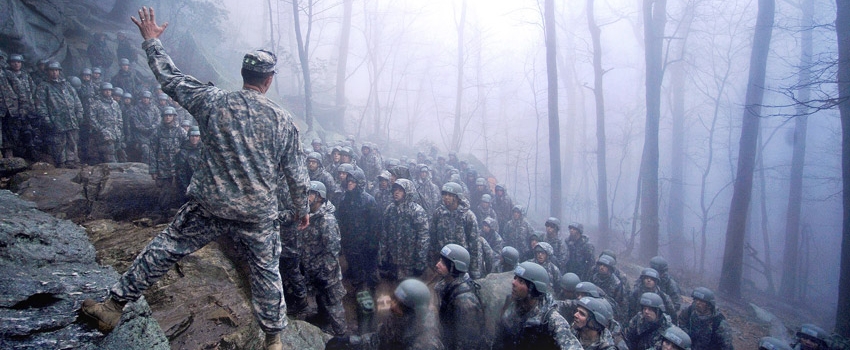
In a therapeutic approach, Mass is achieved through picking a methodology or therapy and being compliant. Anxiety disorders cannot be cured through an on again, off again approach. They take time, patience, and require a strong commitment to work through the pain and discomfort that is going to be produced in facing this disorder. Additionally, Mass refers to more than one element in a fight. In dealing with PTSD, know this: You are not alone! Seek out groups to share your experiences and always look for the opportunity to help others that are beginning their healing process.
Talk therapy and life coaching are 2 complimentary approaches to dealing with trauma. The former deals with your past, all in an effort to bring out the sources of "trapped anxiety"inside you from past trauma. The latter deals with the present and the future, with a focus on guiding you towards the objectives you set for yourself.
Take Away
There are many helpful resources that are available to help you in your healing process. Many of these are complimentary. If given the opportunity to face an overwhelming enemy, would you chose to do it alone or bring as many forces to bear in an effort to achieve personal victory?
Yeah...Mass...it's a good thing! (or as my warriors would say, "Get some!")
You do not have to do this by yourself!
Warrior, over!